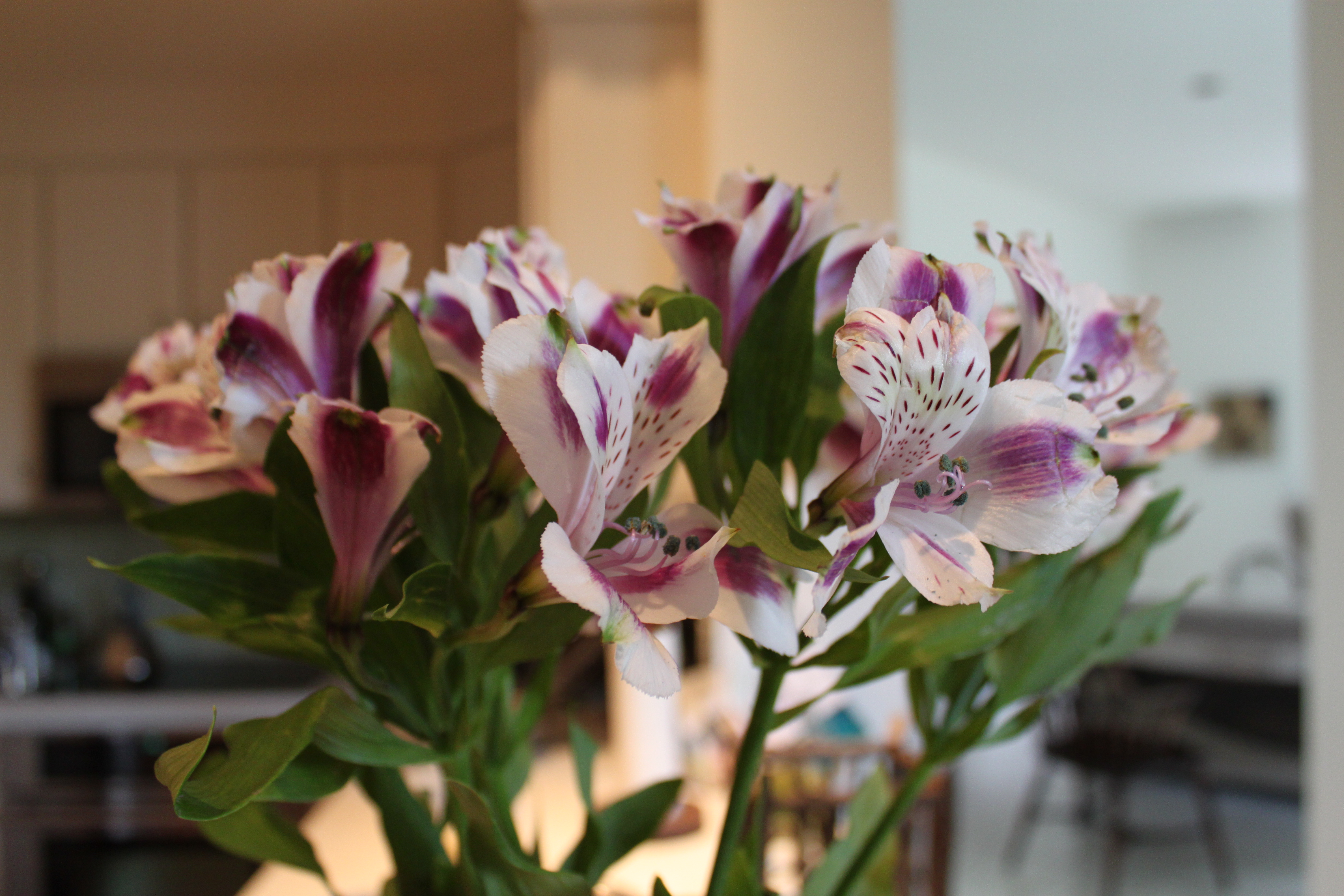
 Red Rose (Diane’s Garden October 2010)
I read Michael Pollan’s The Botany of Desire-A Plant’s Eye View of the World a few years back and was fascinated by his take on the relationship between people and plants. Pollan tells the story of four familiar plant species that are deeply woven into the fabric of our lives and illustrates how each of those species evolved to satisfy our basic yearnings for sweetness (the apple), beauty (the tulip), pleasure (cannabis) and sustenance (the potato). And as we benefited from these plants, the plants, in the grand co-evolutionary scheme, have done well by us. The sweetness of apples, for example, induced the early Americans (Johnny Appleseed) to spread the species and gave the tree a whole new continent in which to blossom.
Pollan’s story on the tulip (beauty) and the financial craze of tulip mania has always made me view a flower from a different perspective. As Pollan states, “some perfectly good flowers simply are what they are, singular and, if not completely fixed in their identity, capable of ringing only a few simple changes on it; hue, say, or petal count. You can prod it all you want, select and cross and reengineer it, but there’s only so much a coneflower or a lotus is ever going to do”.
However, the rose, orchid, and tulip are capable of prodigies and reinventing themselves again and again to suit every change in weather and landscape. And in the co-evolutionary scheme of life and human’s desire for beauty and fragrance, the rose has evolved into over 100 species in a variety of colors. And who benefits?
If you have a chance, pick up Pollan’s book. I promise you that the next time you are deadheading a rose bush, you will think of the bumble bee and you will think of Pollan; he makes you challenge your basic understanding of the natural world.


 inspiredbydi.com