
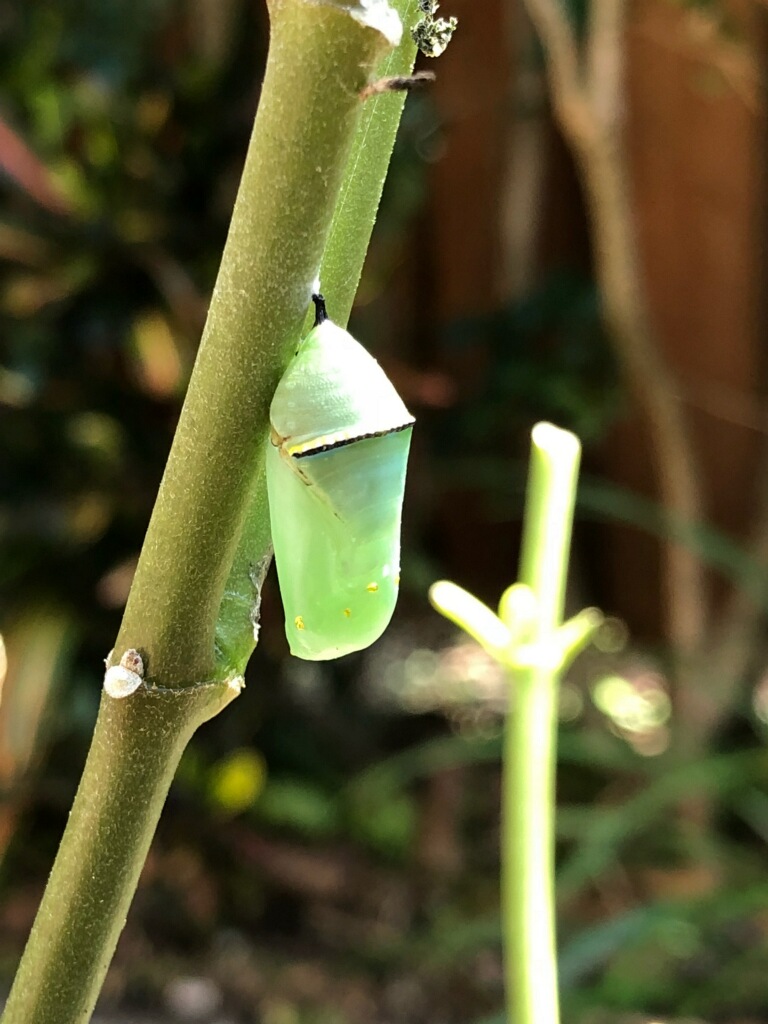
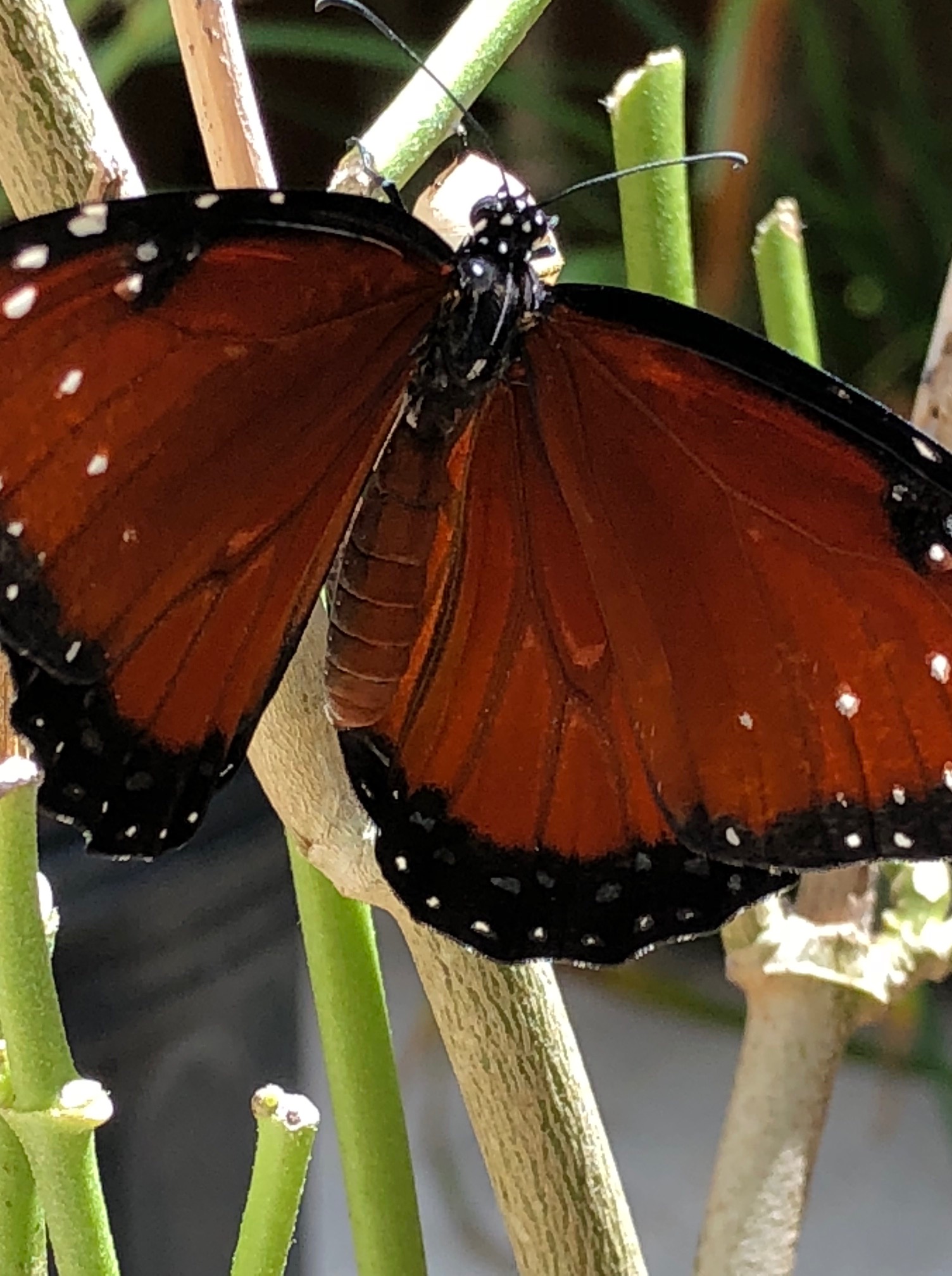
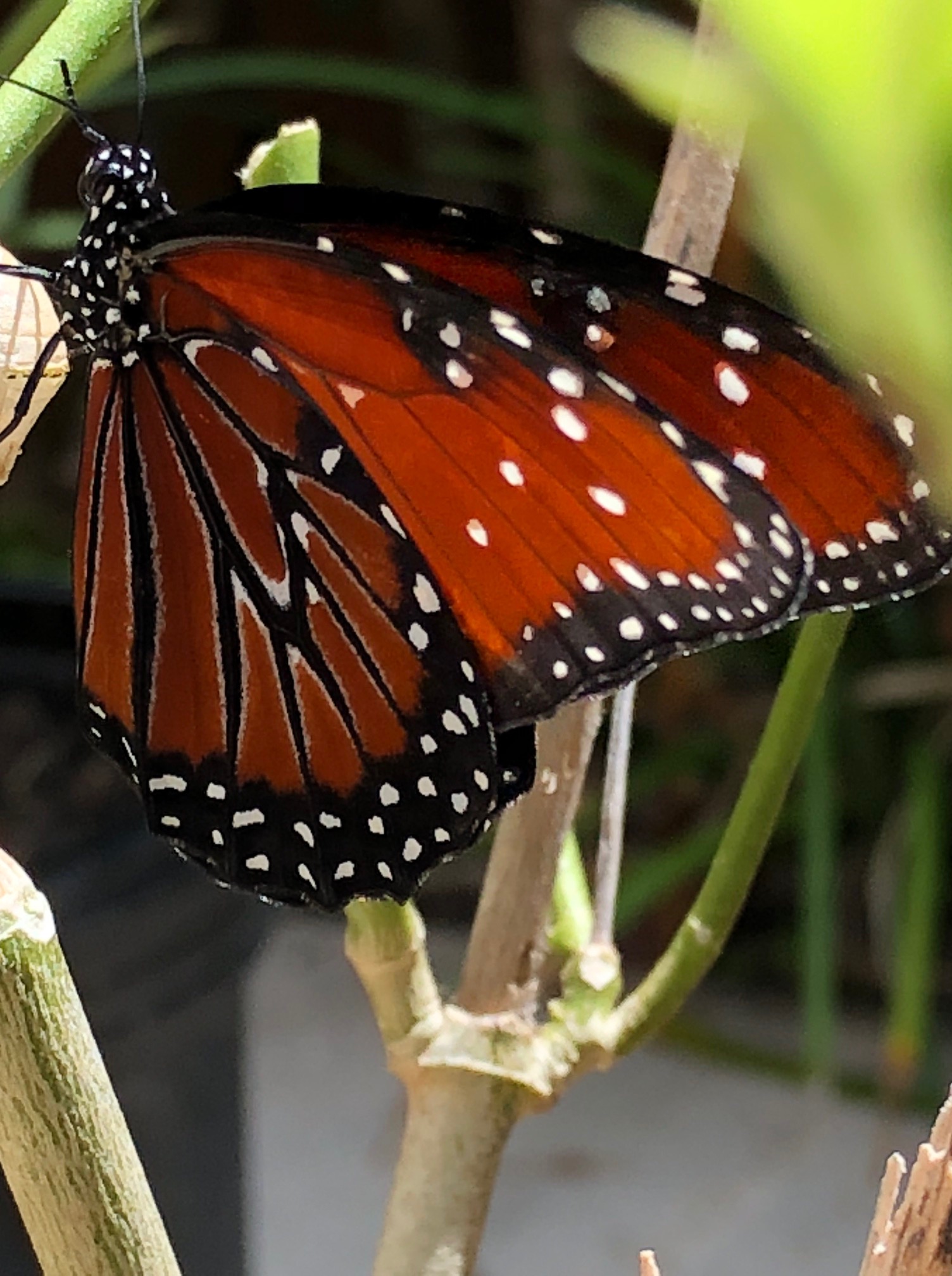
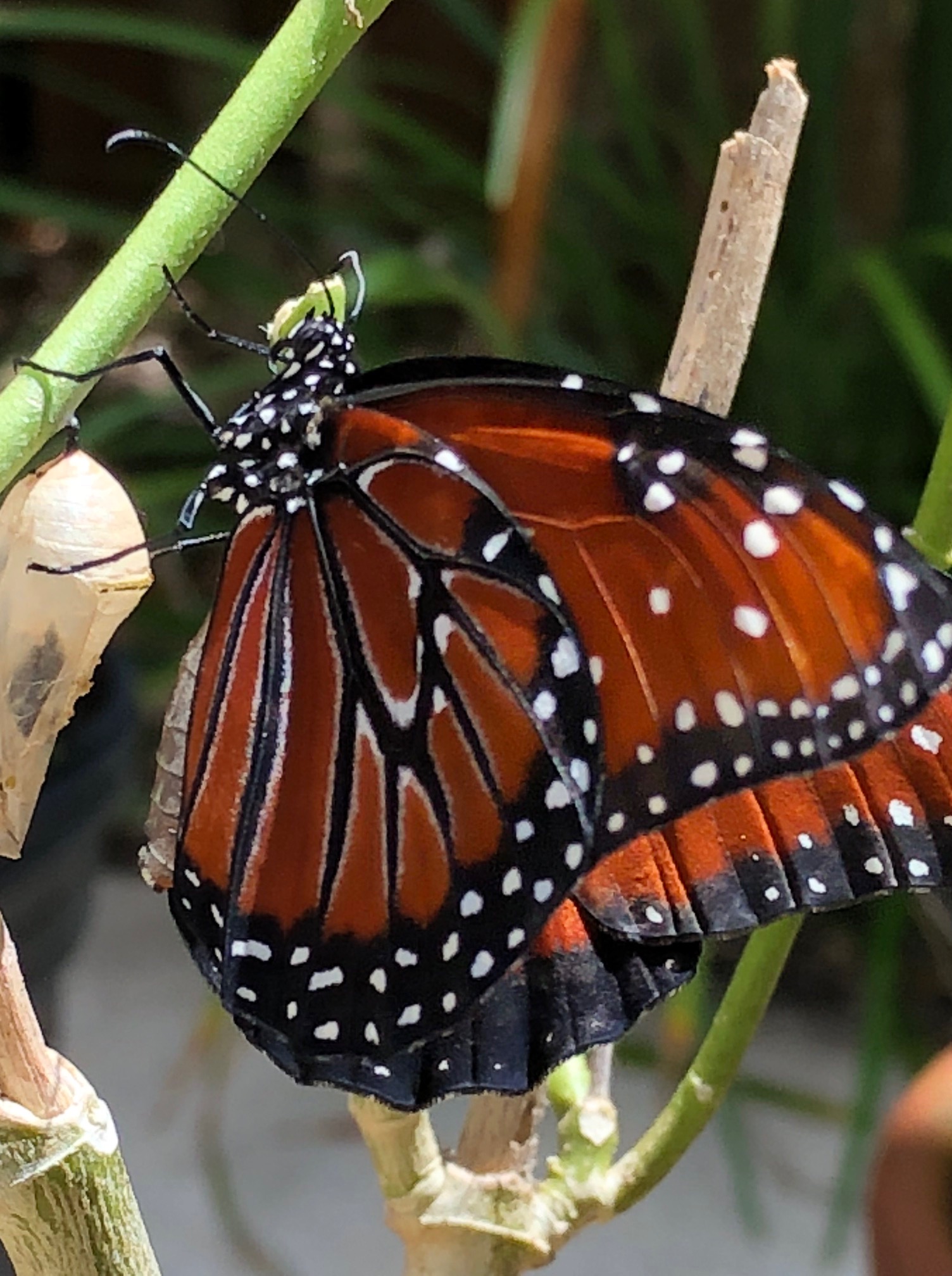
The Queens are in our backyard and they have very subtle differences with the Monarchs.
The Queen chrysalis is smaller and the caterpillar has three sets of protuberances, rather than two. These protuberances are referred to as antennae, but after further research, they are a type of sensory organ called tentacles. Most caterpillars, including the Monarchs, have a set of tentacles at the front of the body and another at the back, but others similar to the Queen have another set somewhere in the middle. These tentacles help the caterpillars sense the world around them through touch, and can also throw off predators by disguising the caterpillar’s head.
The Queens and Monarchs are often mistaken for each other in their various life stages since they both share the milkweed as their host plant. But if you look closely to each of their life cycles, it’s not that hard to tell the difference. The larvae are different with their other set of tentacles, the chrysalses are smaller and the adult butterfly’s colors are obvious. The Queens are solid orange compared to the varying shades of a Monarch with the stained glass vein. There is also a subtle difference in the way their wings fold.


 inspiredbydi.com